BACK TO TOP

The Relationship Between Conservation and the Cape’s Wildflower Trade: A Focus on Proteas
Rupert Koopman with David Bek

Context
ver since the narrow-leaved protea Protea neriifolia was recorded in a 1605 publication by Dutch Botanist Carolus Clusius—thought to be the first formal recording of a Southern African plant—proteas have weaved a golden thread through Dutch-South African relations.
From early on, the Cape region of South Africa was recognised for the horticultural potential of its beautiful flora. However, the first commander at the Cape Colony Jan Van Riebeeck was more interested in another member of the Protea family, the water-loving tree wild almond Brabejum stellatifolium as a source of food (as he learned from the indigenous people of the Cape) and structural use, as a key component in the boundary hedge demarcating the edge of the colony which kept out “intruders” (the same indigenous people) from their best grazing lands.
Today’s wildflower harvesting industry originated in the fynbos vegetation of the Cape Floristic Region, a renowned global floral diversity hotspot. More than 9,000 species are recorded here, meaning almost half of South Africa’s plant species are found in 7.5% of its surface area. Fynbos is mainly found in the Mediterranean climate zone (hot dry summers and cold wet winters) of South Africa, and fire is crucial for its regeneration.
Proteas enjoy iconic status within fynbos vegetation (the king protea is South Africa’s national flower) but are also found in other areas of the African continent, as far north as Sudan. Of the nearly 400 species found in Africa, 353 species of the Protea family are South African and found in the South Western Cape. More than half of these are listed as rare and/or threatened on the International Union for the Conservation of Nature (IUCN) Redlist.1
Many fynbos species are found in highly specialised habitats and small areas. Several hundred fynbos species are found in a single locality, which renders them highly vulnerable to extinction by harvesting, invasive plants, disease, or an unnaturally rapid fire regime (a frequency faster than slow-growing species like Proteas required to reach reproductive maturity).
The beginning of the wildflower harvesting industry can be traced to the Moravian Church Mission Station at Elim, southwest of the regional centre of Bredasdorp. With the help of the German Moravian Church, dried wildflowers (likely ‘everlastings’ from the Daisy family) were exported as early as 1877.2
The Adderley Street Flower Market in Cape Town became (and remains to this day) a place of commerce and struggle, where coloured flower sellers have made a living since the 1880s. Several of today’s active flower sellers are the third and fourth generation to have conducted their trade at this market. Noted Cape-based plant collector Thomas Stokoe3 (who collected more than 20,000 specimens, including 130 species new to science) was a regular visitor to the market to see interesting blooms and was known to rely on the knowledge of the people who went into the mountains to collect beautiful fynbos blooms. It was not unusual for species previously unknown to science, or thought to be extinct, to be found in the market’s flower buckets.
As is typical with many natural resources, the demand for the Cape’s wildflowers led to over-exploitation. This echoed the over-exploitation of the Cape Peninsula forests to feed the needs of the Dutch Colony in the 17th century, where the Peninsula’s forests were exhausted of prime timber. By the 1890s, flower pickers on the Cape Peninsula (close to Cape Town) had harvested 1,000 tons of everlastings and 70 tons of fresh flowers. As a response, the Forestry Department introduced permits in 1893 and was moved to ban picking on the Peninsula by 1897. These efforts at control merely moved the focal point wider, with pickers taking trains to access areas in the Boland mountains (east of Cape Town) and the Overberg region, with Caledon being a prominent source of material.
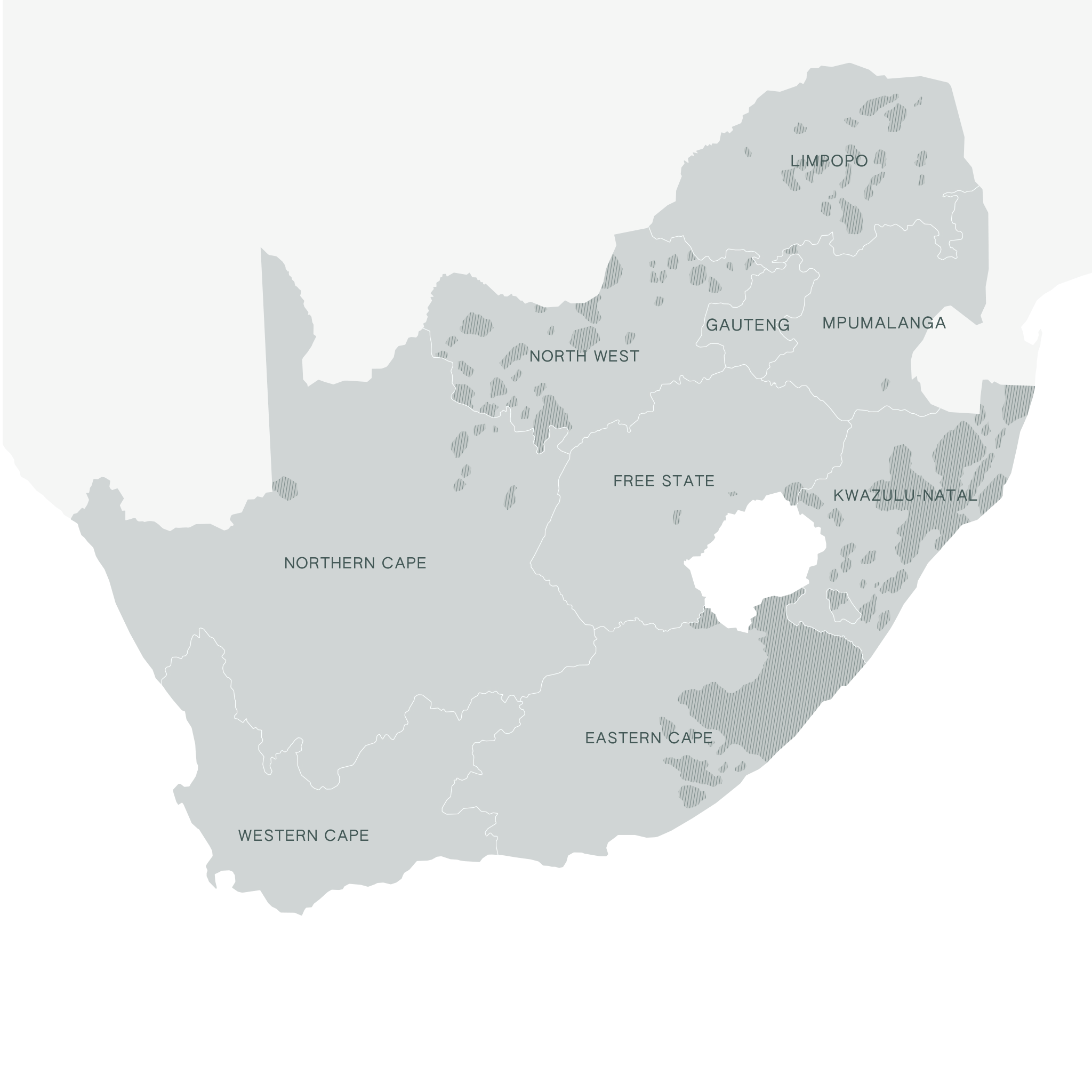
Fig.1 Map of South Africa indicating land distributed to people of colour during the Natives Land Act in 1993
Of legislation and restricted access
Fear of over-exploitation led to the Flower Protection Bill of 1905 and, crucially, was structured in a way which entrenched the rights of landowners (primarily white South Africans) and by requiring permits on state commonage land, coloured flower pickers found themselves to be acting illegally.4 In the debate preceding the adoption of the Flower Protection Bill, a Mr Garlick was quoted as saying that “the introduction of a licence of 3 pounds is directed more at the flower sellers than in favour of the protection of flowers”.5 The trade was made possible by people having access to commonage (and free flowers), and a profit was made. Today’s permits still require landowner permission as a condition.
The Natives Land Act in 1913, which allocated land use to intensify the segregation of black and white inhabitants of South Africa, further restricted public access to wildflower resources. No land was allocated to coloured/black South Africans in the fynbos region of the then Cape Province. The most productive flower fields still available to harvesters were largely restricted to mission station land. In 2017, the most recent comprehensive land audit report by the Department of Rural Development and Land Reform found that whites owned 72 % of agricultural land in the Western Cape. Subsequent figures are hard to find due to land transfers not reliably recording data on the race of landowners.
By 1937, the Wild Flower Protection Ordinance extended the regulations affecting harvesting. However, the investment in enforcement was minimal. A Wildflower law enforcement officer was hired in 1947 and remained a single brick in the law enforcement wall until 1961, when more Nature Conservation officers were employed.6
At this stage, regulation through permitting was mainly deemed a success, and other threats to the fynbos landscape and, by extension, wildflower harvesting were identified. Habitat destruction in the form of poor land use and the spread of invasive non-native species had escalated. An essential aspect of the wildflower industry is that it enables people to generate an income with minimal investment inputs on land that was often less suitable for intensive agriculture – areas with more fertile soil have already been utilised for crops. The Agulhas Plain area is a good example. The natural renosterveld and related areas with clay soils suitable for grain production were quickly reduced to less than 20% of their original extent with the advent of industrial agriculture in the early 20th century. Today, CapeNature, an entity under the Western Cape’s Provincial Government, regulates the wildflower industry.
Making the shift to cultivation
While the wildflower picking industry experienced growing pains, growers were making plans, both through local cultivation and seed distribution (notably in the 1960s) to regions as widespread as Australia, the Canary Islands, Chile, Columbia, California, Hawaii, Guatemala, Israel, New Zealand, and Zimbabwe.
In 1975, renowned grower Frank Batchelor of Stellenbosch bred the first hybrid Protea, “Ivy”, the beginning of today’s commercial cultivation. Advances in growing have continued apace to the extent that today, the International Protea Cultivar Register lists numerous cultivars, forms, and selections of Proteas (more than 240), Leucospermums/ Pincushions (more than 230), and Leucadendron /conebushes (more than 170).
Increasing awareness
These early shows were characterised by mass displays of wildflowers harvested from the veld, and it is unclear whether much thought was given to sustainability. Questions were raised as to whether the educational impacts outweighed the impact of collecting for large displays of flowers. In 1991, 11 towns had wildflower shows with between 120 and 430 species of veld-picked flowers on display.7
A seminal intervention was the 1989 Council for Science and Industrial Research (CSIR) report on The Wildflower Resource: Commerce, Conservation and Research,8 which was the output of a workshop involving key players in research, conservation, and the wildflower industry. Points raised included the fears of conservation authorities that if the wild harvesting of proteas and other fynbos continued to grow, demand would likely exceed nature’s supply and that well-loved and used plants would be driven to extinction.
Some plants were harvested to near extinction, most notably Protea holosericea—8000 flower heads were picked from its only population between 1980 and 1983. The population is unlikely to rebound to previous levels, with drought conditions associated with climate change in the region impacting the recruitment of young plants.
Working together on solutions
In the early 2000s, conservationists developed guidelines to ensure the future sustainability of the wildflower harvesting industry. These guidelines became part of the Sustainable Harvesting Programme (SHP), which was designed and managed by the Flower Valley Conservation Trust with substantial backing from South African and European funders and experts.9 The SHP comprised a Code of Best Practice to inform sustainable picking practices and good landscape management, whilst picking individual species was informed by a pioneering Vulnerability Index10 which evaluated 150 species and recommended appropriate harvesting levels for each. Especially vulnerable species were not permitted to be harvested. Harvester training was integral to the SHP, and a range of outputs were developed to help this process, including the Field Guide for Wild Harvesting,11 which was translated into Afrikaans and isiXhosa to ensure that harvesters could easily access information about good harvesting practices within a sensitive biome. The Xhosa community has come to represent an increasing proportion of the harvester population in recent years, owing to migration patterns from the Eastern to the Western Cape.
Interestingly, the SHP played an essential role in the transformation of the industry in the early 2000s. UK retailer Marks & Spencer played a key role in the early development of the SHP as they saw an opportunity to expand their cut-flower range by including Cape Flora bouquets. The SHP ensured that Marks & Spencer could be confident that key social and environmental standards were being applied within the supply chain. As a result, the UK market for Cape Flora bouquets started to develop apace, spreading within a decade to all UK retailers and many other global markets. Such bouquets typically comprise a focal flower, such as Protea or a pincushion, surrounded by mixed ‘greens.’
This trend is highly significant as exporting bouquets rather than individual stems enables more value to be captured and jobs to be created within South Africa. The growth of the international bouquet market has driven an increase in quality as European retail consumers have high expectations in terms of the appearance, freshness, and vase life of their purchases. Improvements were required in managing supply chains, packing sheds' design, and working practices where the flowers are processed to meet these expectations. Stems must be picked according to precise specifications relating to stem length, number of flowers, and blemishes. More than 2.5 million bouquets were exported in 2023/24, an eight-fold increase in twenty years.12 The domestic market for high-quality bouquets has also soared in this time.
The establishment of the SHP ensured an interface between field data and conservation. Such information sharing enabled two mainstays of wild picking, Protea compacta and Leucadendron platyspermum, which had been viewed as threatened by overharvesting, to be greenlighted as safe to harvest based on additional data supplied by citizen scientists.
Extensive cultivation is now a trade feature, as plantations of desirable species have been established, sometimes replacing natural vegetation, to meet market demand. This can relieve pressure on some wild species. Increasingly, focal flowers are being cultivated as growers can control conditions that guarantee product consistency and attractiveness by producing hybrid varieties.
Industry-sourced figures for 2024 indicate 1304 hectares of fynbos and green orchards, up from 919 ha in 2013. However, this transition to cultivation is not without consequences. Linked to the increase in cultivated supply, the price of most wild picked species has largely remained static for the last 15 years, and, as a result, in-field teams need to select more volume of product just to maintain earnings. There are negative impacts to more formalised cultivation as biodiversity is diminished and natural processes such as fire regimes, vital for ecosystem regeneration, are interfered with.
The area used for wild harvesting is estimated to incorporate 200,000 ha of wild habitat.13 This land is under pressure from non-native invasive plants, fires, and changes in land use, such as cultivation and development. Informal discussions with flower pickers indicate that many of their best areas for picking are no longer accessible due to invasives.
South Africa’s gold medal and multi-award-winning exhibit at the May 2024 RHS Chelsea Flower Show was a microcosm highlighting how the supply of flowers in the fynbos-cut flower industry has shifted. A team led by designer Leon Kluge constructed a colourful fynbos-dominated display called the ‘Cape Flora of South Africa’, which was recreated the following September in the Overberg town of Stanford.
Unlike in previous shows, all the plants were sourced from growers and flower farms in Pretoria, Durban, the Cape, and Citrusdal. I asked Leon for some more detail. “We used 22,000 stems, of which 70% were hybrids or selections of the Proteaceae family. There were about 60 Proteaceae hybrids or selected forms of comparatively few species. The main focal groups were Queen Protea (Protea magnifica) varieties, ground Proteas (an increasingly popular crop in Australia and America which Leon is trying to encourage South African growers to cultivate), Serruria hybrids and smaller hanging Proteas such as Protea pityphylla.”
The future of the wildflower industry hinges on balancing conservation with fair economic opportunities. Ensuring that the benefits of the trade are shared equitably remains a significant challenge—both among the people who depend on the industry for employment and for the landscape itself, which faces ongoing critical threats from over-exploitation, climate change, and the weak application of environmental laws. However, research is continuing, and committed conservationists and industry members promote responsible harvesting and innovation to ensure that South Africa can continue to adapt and successfully maintain its floral heritage while securing a sustainable future for the Cape Flora industry. Popular publications such as this book will also assist in educating the consumer, a vital partner in sustainability efforts globally, as they can positively affect the entire supply chain by driving demand for products produced in a way that is good for the planet and its living inhabitants.
(1) Blackhall-Miles. R Posted 10 December 2020 www.fossilplants.co.uk/iucn-red-list-update-kings-queens-plant-world-threat/ Accessed 1 Dec 2024
(2) The inhabitants of Elim are a Creole people, with indigenous African, Asian and European ancestry. Later, Apartheid legislation would classify this and other communities of similar make up as coloured or Cape Coloured.
(3) Van Sittert L. (2010) The intimate politics of the Cape Floral Kingdom. S Afr J Sci. 2010; 106 (3/4)
(4) van Sittert, L. (2003) ‘Making the Cape Floral Kingdom: the discovery and defence of indigenous flora at the Cape ca. 1890–1939,’ Landscape Research, 28 (1),113–129
(5) House of Assembly (1905) ‘Wild flowers protection bill’, Debates in the House of Assembly , Cape Town: Cape Times Printing Works, 303.
(6) Boehi, M. (2010) Being / becoming the Cape Town flower sellers: the botanical complex, flower selling and floricultures in Cape Town. University of the Western Cape.
(7) Wood J. (1992) Spring Wildflower Shows, Veld & Flora 78 (2) 38-43
(8) Greyling, T. and Davis, G.W. eds, (1989). ‘The Wildflower Resource: Commerce, Conservation and Research – A Report of the Terrestrial Ecosystems Section Ecosystem Programme’. Occasional Report No. 40. Pretoria: Foundation for Research Development, CSIR
(9) https://www.greenagri.org.za/assets/documents-/Projects-Research/Plants/Alternatives/Dept-of-Agric-SHP-info-1.pdf
(10) Privett, S., Bek, D., Bailey, R., Binns, T., Raimondo, D., Kirkwood, D., & Euston-Brown, D. (2019). Conservation in the context of wildflower harvesting: the development and implementation of a Vulnerability Index on the Agulhas Plain of South Africa. Journal of Environmental Planning and Management, 63(10), 1738–1757. https://doi.org/10.1080/09640568.2019.1687428.
(11) https://pureportal.coventry.ac.uk/files/3958124/bekflowercomb.pdf
(12) https://www.capeflorasa.co.za/wp-content/uploads/docs/2024/05/E-Stats-May-2024_NViljoen-FINAL.pdf
(13) https://www.capeflorasa.co.za/wp-content/uploads/docs/2024/05/E-Stats-May-2024_NViljoen-FINAL.pdf
Copyright Dwaalstêr Editions 2026, KVK 94036322
UNTIL
The Relationship Between Conservation and the Cape’s Wildflower Trade: A Focus on Proteas
Rupert Koopman with David Bek

Context
ver since the narrow-leaved protea Protea neriifolia was recorded in a 1605 publication by Dutch Botanist Carolus Clusius—thought to be the first formal recording of a Southern African plant—proteas have weaved a golden thread through Dutch-South African relations.
From early on, the Cape region of South Africa was recognised for the horticultural potential of its beautiful flora. However, the first commander at the Cape Colony Jan Van Riebeeck was more interested in another member of the Protea family, the water-loving tree wild almond Brabejum stellatifolium as a source of food (as he learned from the indigenous people of the Cape) and structural use, as a key component in the boundary hedge demarcating the edge of the colony which kept out “intruders” (the same indigenous people) from their best grazing lands.
Today’s wildflower harvesting industry originated in the fynbos vegetation of the Cape Floristic Region, a renowned global floral diversity hotspot. More than 9,000 species are recorded here, meaning almost half of South Africa’s plant species are found in 7.5% of its surface area. Fynbos is mainly found in the Mediterranean climate zone (hot dry summers and cold wet winters) of South Africa, and fire is crucial for its regeneration.
Proteas enjoy iconic status within fynbos vegetation (the king protea is South Africa’s national flower) but are also found in other areas of the African continent, as far north as Sudan. Of the nearly 400 species found in Africa, 353 species of the Protea family are South African and found in the South Western Cape. More than half of these are listed as rare and/or threatened on the International Union for the Conservation of Nature (IUCN) Redlist.1
Many fynbos species are found in highly specialised habitats and small areas. Several hundred fynbos species are found in a single locality, which renders them highly vulnerable to extinction by harvesting, invasive plants, disease, or an unnaturally rapid fire regime (a frequency faster than slow-growing species like Proteas required to reach reproductive maturity).
The beginning of the wildflower harvesting industry can be traced to the Moravian Church Mission Station at Elim, southwest of the regional centre of Bredasdorp. With the help of the German Moravian Church, dried wildflowers (likely ‘everlastings’ from the Daisy family) were exported as early as 1877.2
The Adderley Street Flower Market in Cape Town became (and remains to this day) a place of commerce and struggle, where coloured flower sellers have made a living since the 1880s. Several of today’s active flower sellers are the third and fourth generation to have conducted their trade at this market. Noted Cape-based plant collector Thomas Stokoe3 (who collected more than 20,000 specimens, including 130 species new to science) was a regular visitor to the market to see interesting blooms and was known to rely on the knowledge of the people who went into the mountains to collect beautiful fynbos blooms. It was not unusual for species previously unknown to science, or thought to be extinct, to be found in the market’s flower buckets.
As is typical with many natural resources, the demand for the Cape’s wildflowers led to over-exploitation. This echoed the over-exploitation of the Cape Peninsula forests to feed the needs of the Dutch Colony in the 17th century, where the Peninsula’s forests were exhausted of prime timber. By the 1890s, flower pickers on the Cape Peninsula (close to Cape Town) had harvested 1,000 tons of everlastings and 70 tons of fresh flowers. As a response, the Forestry Department introduced permits in 1893 and was moved to ban picking on the Peninsula by 1897. These efforts at control merely moved the focal point wider, with pickers taking trains to access areas in the Boland mountains (east of Cape Town) and the Overberg region, with Caledon being a prominent source of material.
Fig.1 Map of South Africa indicating land distributed to people of colour during the Natives Land Act in 1993
Of legislation and restricted access
Fear of over-exploitation led to the Flower Protection Bill of 1905 and, crucially, was structured in a way which entrenched the rights of landowners (primarily white South Africans) and by requiring permits on state commonage land, coloured flower pickers found themselves to be acting illegally.4 In the debate preceding the adoption of the Flower Protection Bill, a Mr Garlick was quoted as saying that “the introduction of a licence of 3 pounds is directed more at the flower sellers than in favour of the protection of flowers”.5 The trade was made possible by people having access to commonage (and free flowers), and a profit was made. Today’s permits still require landowner permission as a condition.
The Natives Land Act in 1913, which allocated land use to intensify the segregation of black and white inhabitants of South Africa, further restricted public access to wildflower resources. No land was allocated to coloured/black South Africans in the fynbos region of the then Cape Province. The most productive flower fields still available to harvesters were largely restricted to mission station land. In 2017, the most recent comprehensive land audit report by the Department of Rural Development and Land Reform found that whites owned 72 % of agricultural land in the Western Cape. Subsequent figures are hard to find due to land transfers not reliably recording data on the race of landowners.
By 1937, the Wild Flower Protection Ordinance extended the regulations affecting harvesting. However, the investment in enforcement was minimal. A Wildflower law enforcement officer was hired in 1947 and remained a single brick in the law enforcement wall until 1961, when more Nature Conservation officers were employed.6
At this stage, regulation through permitting was mainly deemed a success, and other threats to the fynbos landscape and, by extension, wildflower harvesting were identified. Habitat destruction in the form of poor land use and the spread of invasive non-native species had escalated. An essential aspect of the wildflower industry is that it enables people to generate an income with minimal investment inputs on land that was often less suitable for intensive agriculture – areas with more fertile soil have already been utilised for crops. The Agulhas Plain area is a good example. The natural renosterveld and related areas with clay soils suitable for grain production were quickly reduced to less than 20% of their original extent with the advent of industrial agriculture in the early 20th century. Today, CapeNature, an entity under the Western Cape’s Provincial Government, regulates the wildflower industry.
Making the shift to cultivation
While the wildflower picking industry experienced growing pains, growers were making plans, both through local cultivation and seed distribution (notably in the 1960s) to regions as widespread as Australia, the Canary Islands, Chile, Columbia, California, Hawaii, Guatemala, Israel, New Zealand, and Zimbabwe.
In 1975, renowned grower Frank Batchelor of Stellenbosch bred the first hybrid Protea, “Ivy”, the beginning of today’s commercial cultivation. Advances in growing have continued apace to the extent that today, the International Protea Cultivar Register lists numerous cultivars, forms, and selections of Proteas (more than 240), Leucospermums/ Pincushions (more than 230), and Leucadendron /conebushes (more than 170).
Increasing awareness
These early shows were characterised by mass displays of wildflowers harvested from the veld, and it is unclear whether much thought was given to sustainability. Questions were raised as to whether the educational impacts outweighed the impact of collecting for large displays of flowers. In 1991, 11 towns had wildflower shows with between 120 and 430 species of veld-picked flowers on display.7
A seminal intervention was the 1989 Council for Science and Industrial Research (CSIR) report on The Wildflower Resource: Commerce, Conservation and Research,8 which was the output of a workshop involving key players in research, conservation, and the wildflower industry. Points raised included the fears of conservation authorities that if the wild harvesting of proteas and other fynbos continued to grow, demand would likely exceed nature’s supply and that well-loved and used plants would be driven to extinction.
Some plants were harvested to near extinction, most notably Protea holosericea—8000 flower heads were picked from its only population between 1980 and 1983. The population is unlikely to rebound to previous levels, with drought conditions associated with climate change in the region impacting the recruitment of young plants.
Working together on solutions
In the early 2000s, conservationists developed guidelines to ensure the future sustainability of the wildflower harvesting industry. These guidelines became part of the Sustainable Harvesting Programme (SHP), which was designed and managed by the Flower Valley Conservation Trust with substantial backing from South African and European funders and experts.9 The SHP comprised a Code of Best Practice to inform sustainable picking practices and good landscape management, whilst picking individual species was informed by a pioneering Vulnerability Index10 which evaluated 150 species and recommended appropriate harvesting levels for each. Especially vulnerable species were not permitted to be harvested. Harvester training was integral to the SHP, and a range of outputs were developed to help this process, including the Field Guide for Wild Harvesting,11 which was translated into Afrikaans and isiXhosa to ensure that harvesters could easily access information about good harvesting practices within a sensitive biome. The Xhosa community has come to represent an increasing proportion of the harvester population in recent years, owing to migration patterns from the Eastern to the Western Cape.
Interestingly, the SHP played an essential role in the transformation of the industry in the early 2000s. UK retailer Marks & Spencer played a key role in the early development of the SHP as they saw an opportunity to expand their cut-flower range by including Cape Flora bouquets. The SHP ensured that Marks & Spencer could be confident that key social and environmental standards were being applied within the supply chain. As a result, the UK market for Cape Flora bouquets started to develop apace, spreading within a decade to all UK retailers and many other global markets. Such bouquets typically comprise a focal flower, such as Protea or a pincushion, surrounded by mixed ‘greens.’
This trend is highly significant as exporting bouquets rather than individual stems enables more value to be captured and jobs to be created within South Africa. The growth of the international bouquet market has driven an increase in quality as European retail consumers have high expectations in terms of the appearance, freshness, and vase life of their purchases. Improvements were required in managing supply chains, packing sheds' design, and working practices where the flowers are processed to meet these expectations. Stems must be picked according to precise specifications relating to stem length, number of flowers, and blemishes. More than 2.5 million bouquets were exported in 2023/24, an eight-fold increase in twenty years.12 The domestic market for high-quality bouquets has also soared in this time.
The establishment of the SHP ensured an interface between field data and conservation. Such information sharing enabled two mainstays of wild picking, Protea compacta and Leucadendron platyspermum, which had been viewed as threatened by overharvesting, to be greenlighted as safe to harvest based on additional data supplied by citizen scientists.
Extensive cultivation is now a trade feature, as plantations of desirable species have been established, sometimes replacing natural vegetation, to meet market demand. This can relieve pressure on some wild species. Increasingly, focal flowers are being cultivated as growers can control conditions that guarantee product consistency and attractiveness by producing hybrid varieties.
Industry-sourced figures for 2024 indicate 1304 hectares of fynbos and green orchards, up from 919 ha in 2013. However, this transition to cultivation is not without consequences. Linked to the increase in cultivated supply, the price of most wild picked species has largely remained static for the last 15 years, and, as a result, in-field teams need to select more volume of product just to maintain earnings. There are negative impacts to more formalised cultivation as biodiversity is diminished and natural processes such as fire regimes, vital for ecosystem regeneration, are interfered with.
The area used for wild harvesting is estimated to incorporate 200,000 ha of wild habitat.13 This land is under pressure from non-native invasive plants, fires, and changes in land use, such as cultivation and development. Informal discussions with flower pickers indicate that many of their best areas for picking are no longer accessible due to invasives.
South Africa’s gold medal and multi-award-winning exhibit at the May 2024 RHS Chelsea Flower Show was a microcosm highlighting how the supply of flowers in the fynbos-cut flower industry has shifted. A team led by designer Leon Kluge constructed a colourful fynbos-dominated display called the ‘Cape Flora of South Africa’, which was recreated the following September in the Overberg town of Stanford.
Unlike in previous shows, all the plants were sourced from growers and flower farms in Pretoria, Durban, the Cape, and Citrusdal. I asked Leon for some more detail. “We used 22,000 stems, of which 70% were hybrids or selections of the Proteaceae family. There were about 60 Proteaceae hybrids or selected forms of comparatively few species. The main focal groups were Queen Protea (Protea magnifica) varieties, ground Proteas (an increasingly popular crop in Australia and America which Leon is trying to encourage South African growers to cultivate), Serruria hybrids and smaller hanging Proteas such as Protea pityphylla.”
The future of the wildflower industry hinges on balancing conservation with fair economic opportunities. Ensuring that the benefits of the trade are shared equitably remains a significant challenge—both among the people who depend on the industry for employment and for the landscape itself, which faces ongoing critical threats from over-exploitation, climate change, and the weak application of environmental laws. However, research is continuing, and committed conservationists and industry members promote responsible harvesting and innovation to ensure that South Africa can continue to adapt and successfully maintain its floral heritage while securing a sustainable future for the Cape Flora industry. Popular publications such as this book will also assist in educating the consumer, a vital partner in sustainability efforts globally, as they can positively affect the entire supply chain by driving demand for products produced in a way that is good for the planet and its living inhabitants.
(1) Blackhall-Miles. R Posted 10 December 2020 www.fossilplants.co.uk/iucn-red-list-update-kings-queens-plant-world-threat/ Accessed 1 Dec 2024
(2) The inhabitants of Elim are a Creole people, with indigenous African, Asian and European ancestry. Later, Apartheid legislation would classify this and other communities of similar make up as coloured or Cape Coloured.
(3) Van Sittert L. (2010) The intimate politics of the Cape Floral Kingdom. S Afr J Sci. 2010; 106 (3/4)
(4) van Sittert, L. (2003) ‘Making the Cape Floral Kingdom: the discovery and defence of indigenous flora at the Cape ca. 1890–1939,’ Landscape Research, 28 (1),113–129
(5) House of Assembly (1905) ‘Wild flowers protection bill’, Debates in the House of Assembly , Cape Town: Cape Times Printing Works, 303.
(6) Boehi, M. (2010) Being / becoming the Cape Town flower sellers: the botanical complex, flower selling and floricultures in Cape Town. University of the Western Cape.
(7) Wood J. (1992) Spring Wildflower Shows, Veld & Flora 78 (2) 38-43
(8) Greyling, T. and Davis, G.W. eds, (1989). ‘The Wildflower Resource: Commerce, Conservation and Research – A Report of the Terrestrial Ecosystems Section Ecosystem Programme’. Occasional Report No. 40. Pretoria: Foundation for Research Development, CSIR
(9) https://www.greenagri.org.za/assets/documents-/Projects-Research/Plants/Alternatives/Dept-of-Agric-SHP-info-1.pdf
(10) Privett, S., Bek, D., Bailey, R., Binns, T., Raimondo, D., Kirkwood, D., & Euston-Brown, D. (2019). Conservation in the context of wildflower harvesting: the development and implementation of a Vulnerability Index on the Agulhas Plain of South Africa. Journal of Environmental Planning and Management, 63(10), 1738–1757. https://doi.org/10.1080/09640568.2019.1687428.
(11) https://pureportal.coventry.ac.uk/files/3958124/bekflowercomb.pdf
(12) https://www.capeflorasa.co.za/wp-content/uploads/docs/2024/05/E-Stats-May-2024_NViljoen-FINAL.pdf
(13) https://www.capeflorasa.co.za/wp-content/uploads/docs/2024/05/E-Stats-May-2024_NViljoen-FINAL.pdf